
This information is for informational purposes only. It is in no way a substitute for a diagnosis from a medical specialist. To obtain medical advice or a diagnosis, please schedule an appointment with a specialist.
CLÍNICA OFTALMOLÓGICA PEÑARANDA


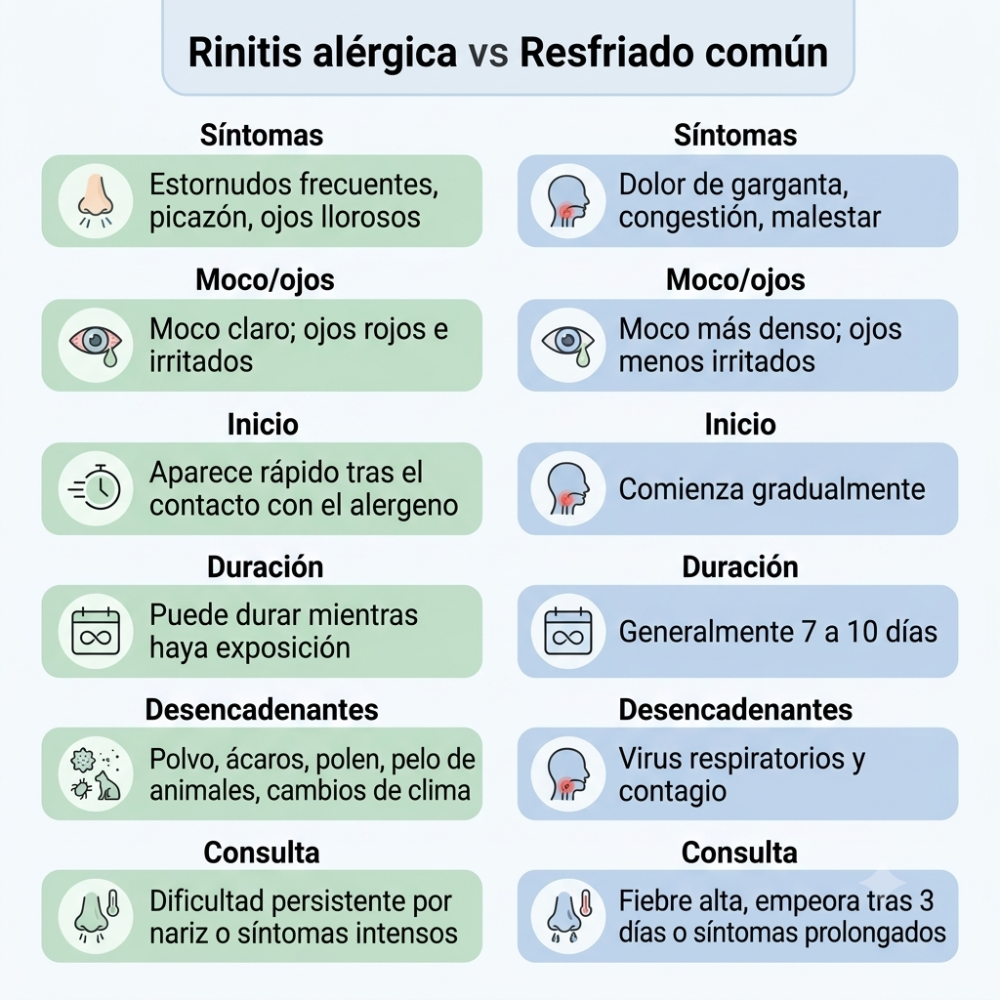
Paying attention to the characteristics of nasal discharge provides key clues. In the case of a common cold, the mucus typically starts out clear and watery, but as days pass, it becomes thick, cloudy, and takes on a yellowish or greenish hue due to the immune response against the virus. In contrast, the mucus associated with allergic rhinitis almost always remains thin, clear, and runny.
The hallmark: itching
Intense itching is the defining characteristic of an allergy. If, in addition to nasal congestion, you experience a constant urge to scratch your nose, throat, palate, or eyes—often accompanied by watery, red eyes—it is highly likely that the diagnosis is allergic rhinitis rather than a common cold.
Medical or otolaryngological attention should be sought when symptoms significantly affect sleep quality, school or work performance, or if complications arise—such as severe ear pain, intense facial pressure, or persistent difficulty breathing.
An accurate diagnosis will prevent the unnecessary use of antibiotics (which are ineffective against viruses or allergies) and allow for the implementation of targeted treatments, such as antihistamines, nasal sprays recommended by a healthcare professional, or immunotherapy.

Since 1964, we have been working for the region, providing the highest quality services to our patients.
Calle 17 # 0 - 88 Barrio La Playa
Carrera 12 # 9-72 Torre B, consultorio 601 Santa Maria
contacto@en.clinicapenaranda.com
(+57) 318 3677052
CLÍNICA OFTALMOLÓGICA PEÑARANDA
En la Clínica Oftalmológica Peñaranda creemos que Internet debe ser accesible para cualquier persona. Nuestro sitio web en.clinicapenaranda.com (actualizado el October 19, 2026) se adhiere a las Pautas de Accesibilidad para el Contenido Web (WCAG 2.1) nivel AA.
Para garantizar la inclusión, empleamos inteligencia artificial y atributos ARIA que optimizan el sitio para lectores de pantalla y facilitan la navegación exclusiva por teclado. Además, ofrecemos perfiles adaptables para diversas necesidades: modo seguro para epilepsia, ceguera, deficiencias visuales, discapacidades cognitivas y TDAH.
Los usuarios pueden personalizar la interfaz ajustando fuentes, colores de contraste, resaltando enlaces y silenciando el audio. El sitio es compatible con los principales navegadores y tecnologías de asistencia. Trabajamos continuamente en mejorar nuestra plataforma.
Si necesita asistencia técnica, encuentra errores de funcionamiento o desea compartir sus sugerencias, por favor contacte a https://en.clinicapenaranda.com/ en el correo contacto@en.clinicapenaranda.com o al teléfono 317413 1550.