

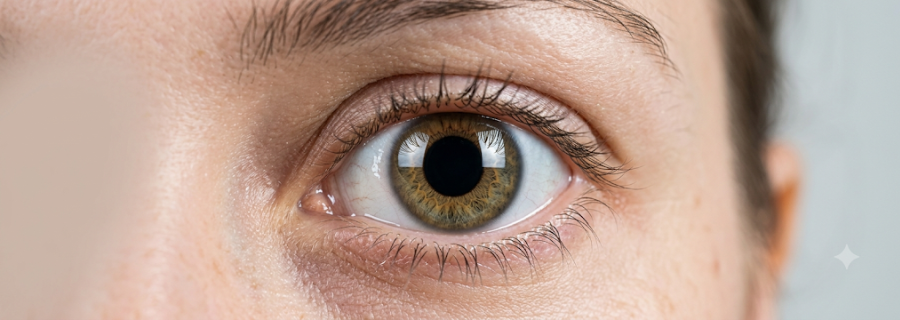
What is it?
Causes
-
Ambient light:
Upon waking, after several hours of sleep, it is normal for the pupils to be dilated—at least until they adjust to daylight or the light in the environment where we find ourselves. Another common situation in which pupils dilate is when we are in dark areas or environments with inadequate lighting where seeing clearly is difficult; the pupils dilate to increase the amount of light entering the eyeball.
It is quite simple: the more light received, the less the pupils dilate; the less exposure to light, the greater the dilation.
-
Emotional stimuli:
Another natural cause of pupil dilation is sudden changes in mood. Emotions such as excitement, nervousness, or enthusiasm can trigger this ocular reaction—regardless of the ambient light level or any other external factors.
-
Chemical agents or drugs:
There are various substances that can also promote pupil dilation.
Some examples include alcohol or drugs, which cause significant stimulation of the muscle fibers that make up the iris. There are also opioid substances that produce the opposite effect—namely, the contraction of the pupil.-
Diseases:
-
- Neurological diseases.
Having a brain tumor or cerebral edema can cause a change in pupil size; the effect may even differ between the two eyes. This can occur, for example, in cases of stroke or hemorrhage.
-
- Trigeminal nerve injury.
This nerve controls various parts of the face. When it is affected—for instance, due to a head injury—the pupil may become permanently dilated; this can also lead to paralysis, jaw pain, or migraines.
-
- Claude-Bernard-Horner syndrome.
When one pupil contracts, it may create the impression that the other pupil is dilated. An injury to the carotid artery, a lung tumor, or brain damage can trigger this condition, leading to a sunken eye and a drooping eyelid.
-
- Symmetric, non-reactive mydriasis.
The pupils remain dilated even when exposed to bright light. When this occurs, it is often an indicator of severe brain damage, such as that seen in cases of cardiorespiratory arrest.
-
- Ophthalmological disease.
If pupil dilation is not due to a neurological condition, it may be caused by a structural injury to the eye that compromises ocular health. Possible causes include a tear resulting from a blow, glaucoma, or ischemia of the iris.