

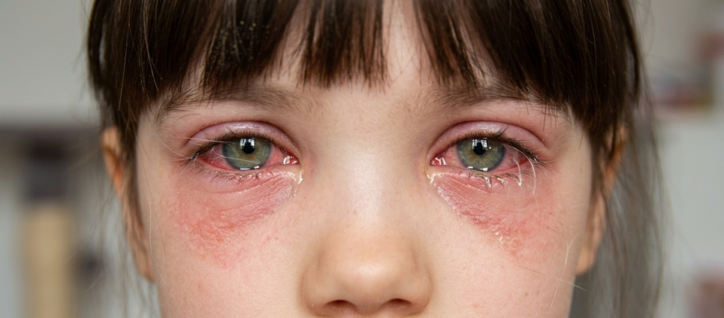
What is it?
It is an inflammation of the conjunctiva (the transparent membrane that covers the white part of the eye and the inner surface of the eyelids). Unlike infectious conjunctivitis, this condition is not contagious. It is not caused by a virus or bacteria, but rather by an exaggerated response of the body’s defenses to an environmental trigger.
Causas
It occurs when a child’s eyes come into contact with an allergen (a substance that triggers an allergy). The immune system mistakenly identifies it as a threat and releases histamine, the chemical compound responsible for inflammation. The most common culprits are:
- Pollen from plants, trees, and grasses (very common during certain times of the year).
- Household dust and dust mites.
- Pet hair, dander, or saliva (from dogs or cats).
- Mold spores in damp environments.
Symptoms
It typically affects both eyes simultaneously and manifests through:
- Intense itching (pruritus): The child feels an uncontrollable urge to rub their eyes.
- Red or pink eyes: Caused by the dilation of small blood vessels.
- Constant tearing: A clear, watery discharge (not a thick or green-colored eye discharge).
- Swelling (chemosis): The eyelids may appear inflamed or “puffy,” and the white part of the eye may take on a slightly gelatinous appearance.
- Sensitivity to light (photophobia): Discomfort when exposed to sunlight or bright lights.
How do we treat her?
Treatment focuses on alleviating symptoms and stabilizing the eye’s response, while also identifying and removing the allergen. It is helpful to keep windows closed on days with high pollen counts, use air purifiers, and vacuum frequently. Your doctor may recommend applying clean, cold-water-soaked cloths to closed eyes to reduce swelling and provide immediate relief from itching. Additionally, preservative-free lubricating eye drops can help “rinse” allergens off the surface of the eye.
The doctor may also prescribe antihistamine or mast-cell-stabilizing eye drops, which inhibit the release of histamine. In severe cases—and only for very short periods—mild corticosteroid drops may be prescribed, provided there is strict medical supervision.
Allergic conjunctivitis is NOT treated with surgery; its management is entirely medical, focusing on prevention and the use of pharmacological treatments, such as eye drops or oral medications.
Although surgery is not required for recovery, it is crucial to prevent a child from chronically rubbing their eyes vigorously. Constant rubbing weakens the tissues of the cornea (the transparent front part of the eye) and, over time, can cause it to become misshapen—a serious condition known as keratoconus, which may eventually require surgical intervention. This underscores the importance of using prescribed eye drops to soothe itching promptly.