

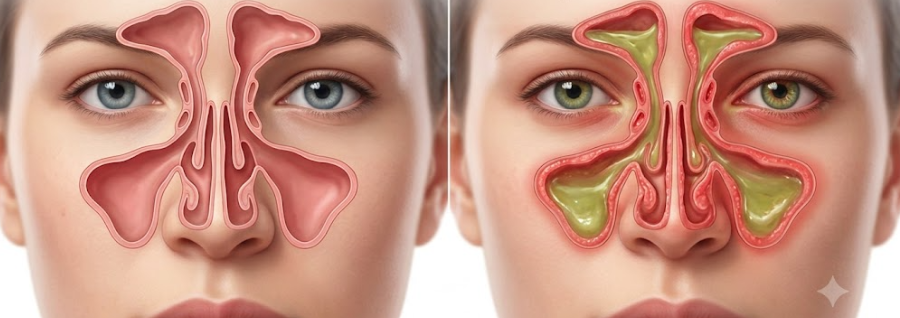
What is it?
It is an inflammation or infection of the paranasal sinuses—the bony cavities located around the nose and eyes. It causes symptoms such as congestion, thick mucus, and facial pain. It is typically triggered by viruses, bacteria, or allergies that block the normal drainage of mucus. Sinusitis is classified as acute—which may last less than 12 weeks and often occurs following a common cold—or chronic, when the inflammation persists for more than 12 weeks.
Causes
The paranasal sinuses become blocked or infected primarily due to:
- Viral infections: Such as the common cold or influenza.
- Allergies: Such as rhinitis or hay fever.
- Bacterial infections: Which can develop when mucus remains trapped for an extended period.
- Structural issues: A deviated septum, nasal polyps (growths), or enlarged turbinates.
- Other factors: Smoking or exposure to tobacco smoke, and weakened immune systems.
Symptoms
Sinusitis may present with symptoms such as:
- Nasal congestion and obstruction: A feeling of a blocked nose that makes breathing difficult.
- Nasal discharge: Thick, yellowish or greenish mucus.
- Pain and pressure: Facial discomfort—particularly in the forehead, cheeks, bridge of the nose, or behind the eyes—that worsens when bending over.
- Other symptoms: Headache, fever, bad breath, fatigue, cough, and postnasal drip (mucus draining down the back of the throat).
How do we treat her?
Depending on the cause and duration of the condition, the attending physician will determine whether any of the following steps are appropriate:
- Performing nasal rinses or using nasal sprays to help flush out the nasal cavities and thin the mucus.
- Using analgesics to manage pain and fever.
- Using nasal corticosteroids—such as prescription sprays—to reduce swelling in the airways.
- Using antibiotics, but only if the physician determines that the condition is a bacterial infection.