

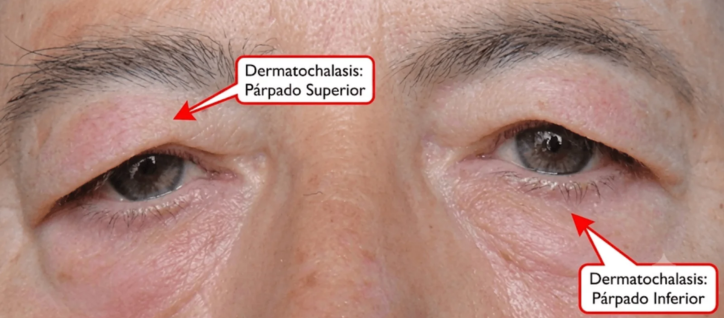
What is it?
It is a common condition characterized by an excess of skin, sagging, and skin folds on the eyelids (upper or lower)—often referred to as “droopy eyes” or a tired-looking appearance. It is caused by aging, a loss of elasticity, and the weakening of connective tissues, and it can potentially affect vision by obstructing the upper field of view.
Although both dermatochalasis and ptosis (drooping of the eyelid) involve a sagging eyelid, in the case of dermatochalasis, this is due to an excess of skin, whereas in ptosis, the drooping is caused by weakness of the levator muscle.
Causes
The main reasons why dermatochalasis may occur include:
- Age.
- Excessive sun exposure.
- Genetic factors.
- Drastic weight changes or hypothyroidism.
Symptoms
- A feeling of heaviness in the eyelids.
- Eye fatigue.
- A tired appearance.
- A reduced upper field of vision, or the need to raise the eyebrows to see better—in severe cases.
How do we treat it?
The only effective solution for dermatochalasis is a surgical treatment known as blepharoplasty—performed on the upper and/or lower eyelids, depending on which are affected. This outpatient procedure is designed to remove excess skin, muscle, and/or fat deposits (often associated with under-eye bags or dark circles) and is the gold standard for cosmetic periocular surgery. The procedure can be performed on the upper eyelids, the lower eyelids, or all four eyelids in a single surgical session, tailored to each patient’s specific needs.
Upper eyelid blepharoplasty primarily focuses on removing excess skin, as fat deposits are generally not present in the upper eyelids. In upper eyelid blepharoplasty, a fine incision is made within the natural crease of the eyelid to conceal the resulting scar. It does not require hospitalization, is typically performed under local anesthesia with sedation, and generally lasts between 30 and 90 minutes.
Meanwhile, lower eyelid blepharoplasty focuses on both the removal and the repositioning of fat to areas where it may be needed; This is a cosmetic surgery procedure designed to remove fat deposits, excess skin (dermatochalasis), and laxity in the lower eyelids. It corrects a tired or aged appearance, resulting in a more youthful and refreshed look by addressing puffiness and wrinkles under the eyes. Several techniques are available, such as the transconjunctival approach—performed from inside the eyelid—which is ideal for removing fat deposits without leaving visible scars. Another option is the classic (subciliary) technique, which involves an incision made just below the eyelashes to remove excess skin and fat. This approach often provides permanent results, as the removed fat typically does not return.